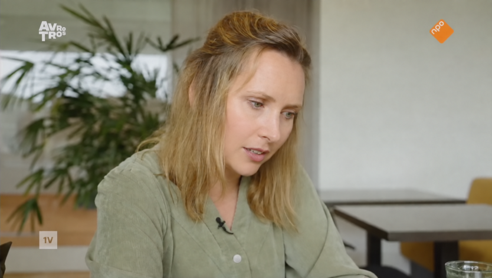
In a live EenVandaag television interview, Vonne Laan discusses TikTok's USD 400 million US privacy settlement and explains why it is not necessarily good news for Dutch claimants.
What privacy obligations do you need to comply with? That depends on your privacy position. In this White Paper, Vonne Laan sets out the new guidance on this topic step by step.
The CJEU Schrems II judgement of July 16th, 2020 affects the legitimacy of data transfers outside the EU. But what does this mean in practice? What is allowed and what is not in relation to transferring data outside the EEA? What measures can now be taken to legitimise such transfers? Read more about this in our White paper.
The use of software through the cloud entails certain risks. One of those risks is that the supplier of the cloud software may go bankrupt. If that happens, it is uncertain whether access to the cloud based software and the data stored in the cloud remains possible and uninterrupted. In practice, multiple continuity solutions have been developed to protect the interests of cloud users. The question is though, whether – and under which conditions – such solutions are legally maintainable under Dutch law.
Over the last year, various European Data Protection Authorities have focused their attention to Direct Marketing. Already, various fines have been imposed for non-compliance with the privacy rules in relation to direct marketing activities. Thus, it is ever more important to mind the rules in this respect. This update may help you achieve this. It gives an overview on in which cases consent is required, and in which cases the legitimate interest can be relied upon. (Dutch only)
Under the GDPR the Dutch Data Protection Authority has the competence to actively publish fines and guidance including the names of the alleged offender(s). The naming of offenders cam lead to reputational damage. What legal measures are present to avoid publication by the DPA? Read more on this in our blog “Naming and shaming onder de AVG: hoe zit dat eigenlijk?” (in Dutch).
Eliëtte Vaal and Vonne Laan wrote a blog about the changing position of the Dutch Data Protection Authority (DPA) during the COVID-19 outbreak towards measuring temperature of natural persons (Dutch only).
The use of biometric data has increased over the last years. Especially the use of facial recognition systems and fingerprint scanners. Using biometric data goes hand in hand with severe privacy risks, such as the loss of freedom, individuality and anonymity. In practice however, the privacy rules concerning the use of biometric data are ambiguous, resulting in legal uncertainty.
In view of the launch of The Data Lawyers, Eliëtte Vaal and Vonne Laan were requested to partake in an interview by Privacyweb. Why did they make this move? What do they wish to contribute to the privacy sector? What are their biggest annoyances in relation privacy law? Please read the interview for their answers to these and other questions.
What are the exact rules in relation to cookie consent? How can consent be obtained in a compliant but also user friendly manner? The Data Lawyers published a white paper about this topic in cooperation with IIR.